Many people assume ATM cards and debit cards are the same, but using the wrong one in the wrong situation can lead to declined transactions, security risks, or even financial inconvenience. Understanding how each card works helps you avoid unnecessary stress, protect your money, and make smarter financial decisions in daily life, whether you’re withdrawing cash or paying online.
ATM vs Debit Card
1. Purpose of Use: Cash Access vs Full Payments
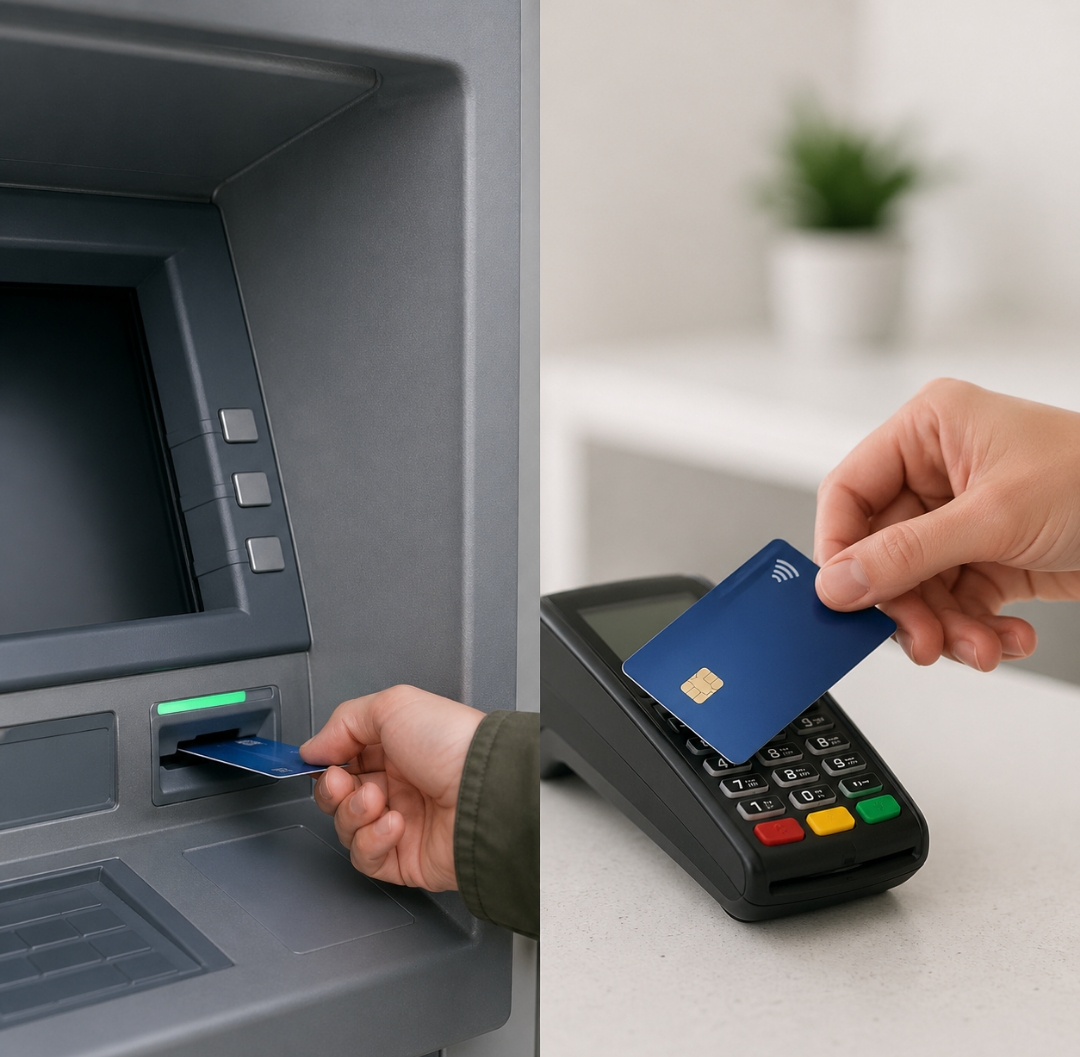
An ATM card is mainly designed for withdrawing cash and checking your balance at machines, making it limited in functionality. A debit card, on the other hand, acts like digital cash from your bank account, allowing you to shop online, pay bills, and make purchases anywhere, giving you far more flexibility in everyday financial transactions.
2. Online Payment Capability Matters
ATM cards generally cannot be used for online payments, which becomes a major limitation in today’s digital world. Debit cards allow you to shop on websites, pay subscriptions, and complete digital transactions securely using OTP verification, making them essential for modern financial activities and convenience.
3. POS Machine Usage in Daily Shopping
When you visit stores, restaurants, or supermarkets, ATM cards usually won’t work on swipe machines. Debit cards are designed for point-of-sale systems, allowing you to pay instantly without needing cash, which saves time and reduces dependency on ATM withdrawals for everyday spending.
4. International Usage and Travel Convenience
ATM cards are often restricted to domestic use, which can be inconvenient while travelling abroad. Debit cards, when enabled for international transactions, can be used globally for payments and ATM withdrawals, making them a better option for travellers who need easy access to funds overseas.
5. Security Features and Protection Levels
ATM cards rely mainly on a PIN for security, offering basic protection. Debit cards come with advanced features like CVV numbers, OTP verification, and two-factor authentication, providing stronger safeguards against fraud, especially during online and international transactions where risks are higher.
6. Card Network Compatibility
Debit cards are connected to major payment networks like Visa, Mastercard, or RuPay, allowing them to work across multiple platforms worldwide. ATM cards usually lack this network integration, limiting their usability and making them less practical in a digitally connected financial ecosystem.
7. Transaction Limits and Flexibility
ATM cards typically have fixed withdrawal limits that can restrict access to your own money in emergencies. Debit cards offer both withdrawal and spending limits, often customisable through banking apps, giving users more control and flexibility over how they manage their daily finances.
8. Contactless Payment Technology
Debit cards often support contactless payments, allowing you to simply tap and pay for quick transactions without inserting the card. ATM cards do not offer this feature, which makes debit cards more convenient, faster, and aligned with modern payment habits in busy environments.
9. Integration with Mobile Wallets
Debit cards can be easily linked to mobile wallets and payment apps, enabling seamless digital payments. ATM cards cannot be integrated into such systems, limiting their usefulness in a world where mobile-based transactions are becoming the norm for convenience and speed.
10. Subscription and Auto-Debit Features
With a debit card, you can set up the automatic payments for subscriptions like streaming services, utility bills, or memberships. ATM cards do not support recurring payments, which means you would need to manually handle transactions, increasing the chances of missed payments.
11. E-commerce Compatibility
Debit cards are widely accepted across e-commerce platforms, making them essential for online shopping. ATM cards lack this capability, which restricts users from participating in the growing online marketplace and limits their purchasing options significantly.
12. Fraud Exposure and Risk Levels
While debit cards offer more features, they also have more exposure points, which can slightly increase fraud risk if not used carefully. ATM cards, due to their limited use, have fewer exposure points, but they also lack advanced security layers, balancing the risk differently.
13. Issuance and Modern Banking Trends
Most banks today prefer issuing debit cards instead of ATM cards because they meet modern customer needs. ATM cards are slowly becoming outdated, and many banks no longer offer them as a primary option, reflecting the shift towards more versatile financial tools.
14. Fees and Charges Comparison
ATM cards usually have minimal or no annual fees, but their limited functionality reduces their value. Debit cards may have small charges depending on the bank, but the added features, convenience, and usability often justify the cost for most users.
15. Overdraft and Financial Flexibility
Some debit cards come with overdraft facilities, allowing you to spend slightly more than your account balance when enabled. ATM cards do not offer such features, making debit cards a more flexible option during short-term financial needs.
16. Rewards, Cashback, and Benefits
Debit cards often provide cashback offers, discounts, and reward points on transactions, adding extra value to your spending. ATM cards do not offer such benefits, which means you miss out on savings and incentives when using them regularly.
17. Global ATM Withdrawal Access
Debit cards can be used at international ATMs connected to global networks, making it easier to access cash anywhere in the world. ATM cards are often restricted to local networks, which can be limiting in urgent situations abroad.
18. EMV Chip and Advanced Technology
Debit cards are equipped with EMV chip technology, which enhances security by encrypting transaction data. ATM cards may lack advanced chip features, making them less secure and more vulnerable compared to modern debit cards.
19. Card Control and App Management
With debit cards, you can control settings through mobile banking apps, such as enabling or disabling transactions, setting limits, and blocking the card instantly. ATM cards typically do not offer such advanced control features, reducing user convenience and security.
20. Future Relevance in Digital Banking
ATM cards are gradually becoming obsolete as digital payments continue to grow. Debit cards are now a standard financial tool, evolving with technology and offering features that align with current and future banking needs, making them the smarter long-term choice.
Making the Right Choice for Your Financial Needs
Choosing between an ATM card and a debit card depends on how you manage your money, but for most people, a debit card is the better option due to its versatility and convenience. Understanding these differences ensures you avoid mistakes, reduce financial risks, and use your card confidently in both offline and online environments.
FAQS
FAQ 1: What is the main difference in ATM vs debit card usage?
When comparing an ATM vs a debit card, the key difference lies in how each is used. An ATM card is mainly designed for cash withdrawals and basic banking tasks at machines, while a debit card offers broader functionality like online payments, shopping, and bill payments. Understanding ATM vs debit card helps users choose the right option based on daily financial needs and convenience.
FAQ 2: Which is safer to use, an ATM vs a debit card for daily transactions?
In the debate of ATM vs debit card, both are generally secure, but debit cards come with added risks due to online usage. However, they also include advanced security features like OTP verification and fraud protection. Knowing ATM vs debit card safety differences can help users make smarter choices and adopt better security habits while managing their money digitally.
FAQ 3: Can an ATM vs debit card both be used for online shopping?
When discussing ATMs vs debit cards, only debit cards are typically enabled for online shopping and digital payments. ATM cards are limited to cash withdrawals and basic services. Understanding ATM vs debit card in this context helps users avoid confusion when making online transactions and ensures smoother payment experiences.
FAQ 4: Is there any difference in charges for an ATM vs. a debit card?
In the ATM vs debit card comparison, both may have fees depending on usage. ATM cards may incur charges after free withdrawal limits, while debit cards might include transaction or annual maintenance fees. Knowing ATM vs debit card fee structures helps users manage banking costs more effectively.
FAQ 5: Are ATM vs debit cards issued together by banks?
In many cases of ATM vs debit card, banks now issue debit cards by default instead of separate ATM cards. Debit cards already include ATM functionality, making them more versatile. Understanding ATM vs debit card issuance trends helps users know what to expect when opening a new account.
FAQ 6: Can an ATM vs debit card be used internationally?
When comparing ATMs vs. debit cards for global use, debit cards are widely accepted internationally for payments and withdrawals, especially if enabled. ATM cards, however, are often limited to domestic use. Knowing ATM vs debit card international usability is important for travellers.
FAQ 7: What are the daily limits on ATM vs debit card transactions?
In ATM vs debit card usage, both have daily limits set by banks. ATM cards have withdrawal limits, while debit cards have both spending and withdrawal limits. Understanding ATM vs debit card limits helps users plan transactions without interruptions.
FAQ 8: Is a PIN required for ATM vs debit card usage?
For ATM vs debit card, a PIN is essential for ATM withdrawals and POS transactions. Debit cards may also use OTPs or contactless methods for added convenience. Knowing ATM vs debit card authentication methods improves transaction security awareness.
FAQ 9: Which is more convenient, ATM vs debit card?
In the ATM vs debit card comparison, debit cards are more convenient due to their multi-purpose use, including payments and withdrawals. ATM cards are limited in functionality. Understanding ATM vs debit card convenience helps users choose a more flexible banking tool.
FAQ 10: Can an ATM vs debit card be blocked easily if lost?
Both ATM vs Debit Card can be blocked quickly through mobile banking or customer care. Immediate action helps prevent fraud. Knowing ATM vs debit card blocking procedures ensures better financial safety in emergencies.
FAQ 11: Do ATM vs debit cards offer reward points or cashback?
In the ATM vs debit card comparison, debit cards often provide rewards, cashback, or offers on transactions, while ATM cards do not. Understanding ATM vs debit card benefits can help users maximise savings during spending.
FAQ 12: Can an ATM vs debit card be linked to mobile wallets?
When it comes to ATM vs debit card, only debit cards can be linked to mobile wallets for digital payments. ATM cards lack this feature. Knowing ATM vs debit card compatibility with apps improves digital payment usage.
FAQ 13: Are ATM vs debit cards suitable for bill payments?
In ATM vs debit card usage, debit cards are ideal for bill payments both online and offline, while ATM cards are not designed for this purpose. Understanding ATM vs debit card functionality helps users manage recurring expenses efficiently.
FAQ 14: How does an ATM vs. debit card impact budgeting?
When comparing ATMs vs debit cards, debit cards provide transaction history and digital tracking, helping with budgeting. ATM cards only allow cash withdrawals. Knowing the ATM vs debit card impact on finances helps improve money management habits.
FAQ 15: Can an ATM vs debit card be used for subscriptions?
In the ATM vs debit card comparison, debit cards can be used for subscriptions like OTT platforms and apps, while ATM cards cannot. Understanding ATM vs debit card usage helps users manage recurring digital services.
FAQ 16: Is the activation process different for an ATM vs a debit card?
For ATM vs debit card, activation usually involves setting a PIN through ATM or mobile banking. Debit cards may require additional steps for online usage. Knowing ATM vs debit card activation ensures smooth initial setup.
FAQ 17: Are ATM vs debit cards accepted at POS machines?
In the ATM vs debit card comparison, debit cards are accepted at POS machines for payments, while ATM cards typically are not. Understanding ATM vs debit card acceptance improves payment flexibility.
FAQ 18: Can an ATM vs debit card be used for contactless payments?
When comparing ATMs vs. debit cards, contactless payments are available only with debit cards that support tap-to-pay features. ATM cards lack this functionality. Knowing ATM vs debit card technology helps users adopt modern payment methods.
FAQ 19: Do ATM vs debit cards expire after a certain period?
In ATM vs debit card usage, both cards come with an expiry date, after which they must be renewed. Understanding ATM vs debit card validity helps users avoid transaction issues.
FAQ 20: Which is better overall, an ATM vs a debit card?
In the final comparison of ATM vs Debit Card, debit cards are generally better due to their wide range of features, including payments, online use, and rewards. ATM cards are limited to basic functions. Understanding ATM vs debit card helps users make smarter financial decisions. _
About the Author
Rio is the creator of EMIChecker and writes educational content on EMI calculations, loans, investment concepts, and personal finance tools. Through practical guides and calculators, Rio aims to help readers better understand financial topics and make more informed decisions.
Financial Disclaimer
The information and calculators provided on this website are for educational and informational purposes only and should not be considered financial, investment, tax, or legal advice.
Calculator results are estimates based on the information provided and may vary due to individual circumstances and market conditions.
Always consult a qualified financial professional before making any financial decisions.